

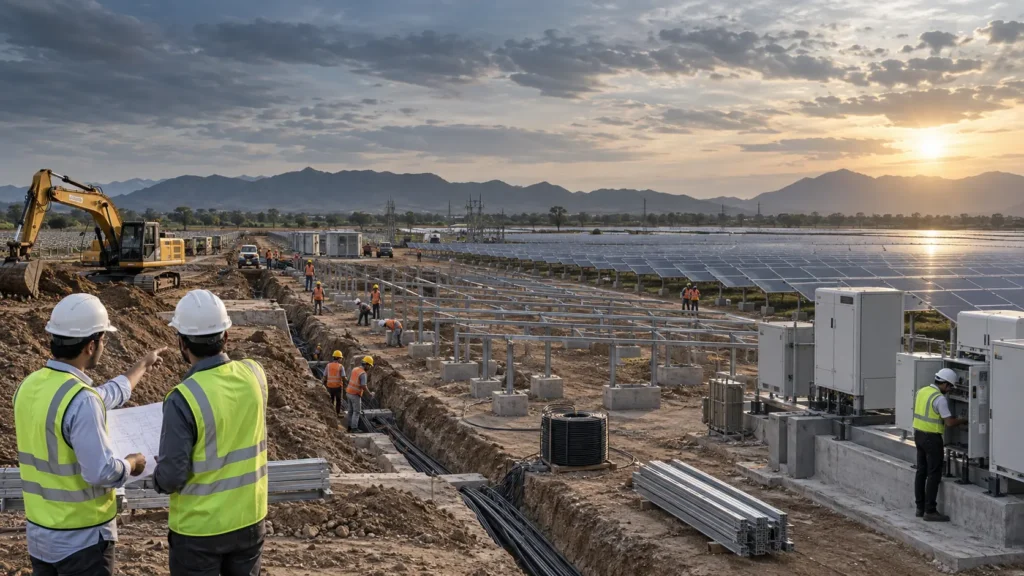
A solar power project may look simple from a distance: rows of panels, electrical equipment and a connection to the grid. In reality, delivering a utility-scale solar project requires many interconnected activities, from preparing the site and developing foundations to installing electrical systems, testing equipment and handing the completed project over for operation.
This is where Solar EPC becomes important.
EPC stands for Engineering, Procurement and Construction. In a project environment, however, the work often extends beyond those three words. A reliable solar EPC approach must connect engineering decisions with site conditions, construction requirements, installation, testing, commissioning and long-term support.
Understanding the Solar EPC Lifecycle
A solar project generally moves through several connected stages.
1. Project Planning and Engineering
Before construction begins, the project has to be understood from an engineering and execution perspective.
This includes reviewing the site, understanding project requirements, planning the work sequence and preparing the infrastructure required for construction. The objective is to turn a project requirement into a practical execution plan.
Good planning is particularly important for large project sites because civil works, electrical infrastructure, logistics, manpower and equipment must work together rather than as isolated activities.
2. Site Preparation and Earthworks
A solar project needs a site that is prepared for construction.
Site preparation may involve clearing, grading, excavation, earthwork and development of access areas. The condition of the land influences how subsequent piling, foundations, roads and drainage activities are carried out.
At this stage, execution teams need to work according to actual site conditions rather than relying only on theoretical plans.
3. Piling and Foundation Works
Solar structures require stable and properly executed foundations.
Piling, foundation preparation, RCC works and structural support form an important part of the civil scope of a ground-mounted solar plant. These activities directly support the installation of the solar mounting structure and ultimately the modules.
For large solar developments, consistency across thousands of foundation points becomes a major execution consideration.
4. Electrical and Supporting Infrastructure
The solar modules are only one part of the project.
A functioning solar plant also requires supporting infrastructure such as inverter stations, control rooms, earthing and lightning protection, cable trenches and LT/HT cable laying.
These systems connect the physical solar generation area with the electrical infrastructure needed for operation.
BKD ARCON’s documented solar infrastructure capabilities include inverter stations and control rooms, earthing and lightning protection, LT/HT cable trenching and laying, roads, fencing, storm-water drains and SCADA support.
5. Construction and Installation
Once the site’s civil and infrastructure requirements are ready, construction and installation activities progress across the project.
This can include mounting structures, module installation, electrical infrastructure and associated project works. Coordination between different teams is essential because delays in one activity can affect subsequent stages.
6. Testing and Commissioning
A project is not complete simply because the equipment has been installed.
Testing and commissioning provide an important transition between construction and operation. Systems need to be checked, required documentation completed and the project prepared for handover.
The company’s documented Solar EPC process covers construction, installation, testing, commissioning and handover, followed by O&M support where required.
7. Handover and Ongoing Support
After commissioning, the focus shifts toward operational readiness.
Depending on the project scope, this can include handover activities, plant monitoring and operations and maintenance support.
This final stage is important because a solar project is designed to operate over the long term, not simply to reach the construction completion date.
Why Integration Matters
One of the biggest challenges in infrastructure projects is coordination.
Civil works, electrical infrastructure, equipment, manpower, site security and facility support all influence the project environment. When these activities are managed independently, communication gaps can create avoidable delays.
An integrated project approach helps bring these requirements together.
For BKD ARCON, Solar EPC & Infrastructure sits alongside industrial security, facility management and project resources, creating a broader support structure around project execution.
The Bigger Picture
Solar EPC is not simply about installing solar panels.
It is about building the physical and operational foundation that allows a solar project to function reliably—from the land on which the project is developed to the civil works, electrical infrastructure, testing, commissioning and long-term support that follow.
The quality of execution at every stage contributes to the overall project outcome.
Conclusion
A successful solar project depends on more than individual activities. It depends on how those activities connect.
At BKD ARCON, our approach is built around that project perspective: Plan Efficiently. Execute Reliably. Deliver Responsibly.
For project developers and infrastructure partners, the right EPC approach is one that understands both the technical scope and the realities of site execution.